7 Best Ways to Store a Golf Cart for the Off Season?

Time:2026-09-29 Author:Charlotte
0%

When temperatures drop and the course quiets down, a golf cart can sit untouched for weeks or months. That is when small oversights matter: a battery left partly charged, damp leaves trapped beneath the floorboard, or tires carrying the cart’s full weight in one spot. Knowing how to store a golf cart for the off-season helps protect its batteries, tires, and electrical connections—and makes spring startup less of a gamble.

Battery care deserves particular attention. Trojan Battery’s published user guides recommend charging batteries before storage and checking their condition during extended downtime; exact instructions vary by battery type and model. Lead-acid and lithium batteries do not share identical storage needs, so the cart’s manual should take precedence over generic advice. The U.S. Department of Energy’s Alternative Fuels Data Center also explains that battery performance and lifespan depend on factors such as temperature and maintenance. Cold storage is not automatically a problem. Neglect can be.

There are practical details, too. Park on a clean, level surface, use the parking brake as directed, and keep the cart away from standing water. A breathable cover can help, but a tightly sealed tarp may trap moisture. Small choices add up. The recommendations below cover seven useful ways to prepare a golf cart for its off-season, from cleaning and battery care to tire support and spring inspection. Not every setup is the same, and one point is easy to miss: even careful storage cannot replace the manufacturer’s instructions.
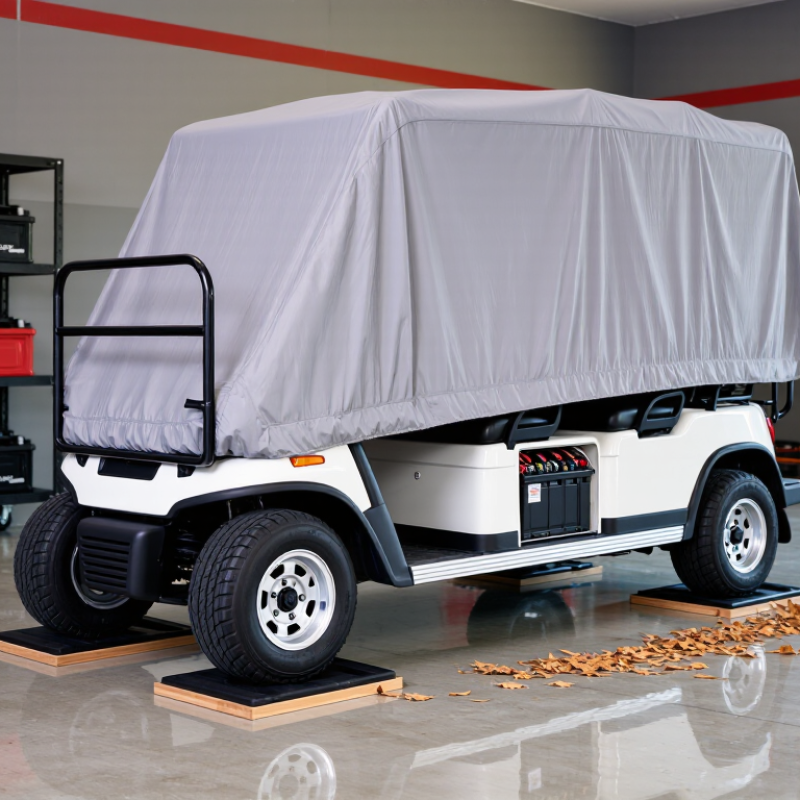
7 Best Ways to Store a Golf Cart for the Off Season?

Assess the Golf Cart and Choose a Suitable Storage Location

Before storing a golf cart, assess its actual condition, not its appearance. Check whether it uses lead-acid or lithium-ion batteries. Look for cracked cases, corrosion, loose cables, fluid residue, or unusual odors. A clean surface can hide damage. I once assumed a dry battery compartment was safe; a closer inspection showed a corroded terminal underneath.

Battery condition should influence the storage location. The U.S. Environmental Protection Agency reported a 99% recycling rate for lead-acid batteries in its 2018 Facts and Figures report. That figure reflects established handling practices, not permission to ignore leaks. Lead-acid batteries need a dry, ventilated area away from flames and living spaces. OSHA’s powered industrial truck guidance also emphasizes ventilation during charging because batteries can release hydrogen gas. Keep charging equipment off damp floors.

For lithium-ion carts, avoid sealed storage rooms, direct sunlight, and extreme heat. Choose a covered garage with stable temperatures, a solid floor, and enough clearance for inspection. Outdoor storage is a compromise, even with a waterproof cover. Moisture can reach connectors, brakes, and charging ports from below. Wash the cart, dry it completely, and photograph existing damage before parking it. Check the tires and suspension, but follow the cart’s manual for pressure and charging levels. Guessing here is tempting. It is also where small mistakes become expensive.

Clean, Dry, and Protect the Cart Before Storage

Before storing a golf cart, wash away mud, grass, and road salt from the frame and wheels. These materials hold moisture against metal parts and encourage corrosion. Use mild soap, clean water, and a soft brush around the footwell and suspension areas. Avoid flooding electrical components. I once rushed this step and found rusty hardware after winter. That mistake was preventable.

Dry the cart completely before covering it. Wipe the seats, dashboard, cables, and storage compartments with a clean towel. Leave the compartments open briefly so trapped moisture can escape. Check the tires and inflate them to the recommended pressure. A dry, sheltered floor is better than bare soil or damp concrete. Small details matter.

Protect the cart with a breathable cover that fits securely. Plastic sheeting can trap condensation and create a humid pocket. Follow the battery maker’s storage instructions, including charging levels and cable requirements. Inspect the battery area for dirt, leaks, or loose connections before storage. Do not ignore unusual odors or damaged wiring. Take photographs before disconnecting anything, because memory becomes unreliable after several months. Recheck the cart periodically, especially after heavy rain or sudden temperature changes.

Prepare the Battery System for Long-Term Inactivity

7 Best Ways to Store a Golf Cart for the Off Season?

Prepare the Battery System for Long-Term Inactivity

Battery care begins before parking the cart. The U.S. Department of Energy reports that battery capacity declines faster under high temperatures, making a cool, dry storage area essential. For flooded lead-acid batteries, fully charge the pack, then inspect electrolyte levels. Add distilled water only when required. Never use tap water. Clean corrosion from terminals with protective gloves and eye protection. Dry surfaces completely.

Disconnect the main negative cable after charging. This limits slow electrical drain from alarms, converters, and monitoring devices. The Battery Council International notes that lead-acid batteries can lose roughly 3% to 5% of their charge monthly, depending on temperature and condition. Check the battery voltage every 30 days. Recharge when readings fall below the battery maker’s recommended level. Do not leave the charger connected indefinitely unless it has a suitable maintenance mode.

Lithium-based systems need different handling. The International Energy Agency reports that lithium-ion batteries age faster at high charge levels and elevated temperatures. Store them near 40% to 60% charge, if the service manual permits. Switch off the battery system and protect the cart from moisture. I have seen owners focus on tire pressure while ignoring a warm battery compartment. That mistake is easy to repeat. Always follow the battery type’s service instructions.

Shield the Tires, Body, and Controls from Seasonal Damage

7 Best Ways to Store a Golf Cart for the Off Season?

Shield the Tires, Body, and Controls from Seasonal Damage

Wash the cart thoroughly, then dry every seam, pedal, and storage pocket. Dirt holds moisture against paint and metal. Inspect the body for scratches, loose fasteners, and small cracks before covering it. A breathable, fitted cover protects the finish without trapping condensation. Plastic sheeting can create problems.

Inflate the tires to the recommended pressure and place the cart on firm, level ground. Flat spots may develop during long storage. Rotating the wheels occasionally helps, although it is easy to forget. Wheel chocks provide safer support than relying only on the parking brake. Keep the cart away from standing water, leaking roofs, and direct sunlight.

Clean the battery area and check for corrosion, damaged cables, or unusual swelling. Follow the cart’s charging instructions, because battery requirements differ by system. Remove the key, switch off accessories, and keep the control panel dry. Cover exposed openings only after confirming proper ventilation. Moisture trapped near switches can cause faults when the cart returns to service.

For fuel-powered carts, inspect the fuel system and follow the engine manual’s storage guidance. Do not leave old fuel unattended for months. Every few weeks, inspect the cover, tire pressure, and storage area. That small check often prevents expensive surprises. My own routine would still need improvement: a checklist is more reliable than memory.

Inspect and Restart the Golf Cart After Storage

After months in storage, a golf cart should not be restarted casually. I inspect it in daylight, with the cart parked on level ground. I check the tires for flat spots, cracks, and unusual pressure loss. The brakes should feel firm, not soft or delayed. I also examine cables, terminals, belts, and visible wiring for corrosion or rodent damage.

Tips: Clean dusty battery tops before testing them. Wear eye protection and gloves. For flooded batteries, check fluid levels only after reviewing the service instructions. Never force a swollen, leaking, or badly corroded battery into service. A qualified technician should inspect serious damage. I once overlooked a loose terminal because the cable looked clean. The cart started, then stopped minutes later.

Reconnect the battery system according to the manufacturer’s procedure. Confirm that the charger and cables are dry and undamaged. For gas-powered carts, inspect the oil, fuel lines, air filter, and fuel condition before starting. Keep the parking brake engaged, clear the area, and test the accelerator gently. Listen for clicking, grinding, uneven running, or warning sounds. Let the cart idle briefly before driving. Then test braking, steering, reverse, and forward movement at walking speed. A slow restart reveals problems early. Record anything unusual, even if it seems minor. Small notes can prevent a larger repair later.

7 Best Ways to Store a Golf Cart for the Off Season? - Inspect and Restart the Golf Cart After Storage
No. Storage Method Preparation Before Storage Recommended Storage Conditions Periodic Maintenance Inspection and Restart Procedure Important Cautions
1 Use a Covered, Dry Indoor Location Clean and dry the cart thoroughly, remove mud and grass, and allow the body, floorboard, and battery area to dry completely. Choose a cool, dry, well-ventilated area with a level floor. Keep the cart away from rain, direct sunlight, heaters, and ignition sources. Check for moisture, rodents, insects, and tire pressure at least once a month. Remove the cover, inspect for corrosion or water entry, verify that controls move freely, and test the brakes before driving. Do not store the cart in a sealed, damp space because condensation can damage electrical components and metal parts.
2 Clean and Protect the Exterior Wash the cart with mild soap and water. Dry electrical connectors, seats, battery compartments, and metal hardware. Apply a suitable protectant to vinyl surfaces if recommended by the vehicle manual. Cover the cart with a breathable, water-resistant cover that does not trap condensation. Inspect the cover for tears and remove accumulated dust or moisture. Do not place heavy items on top of the cart. Look for cracked plastic, faded or brittle seats, loose fasteners, and corrosion. Clean contact points before reconnecting power. Avoid using high-pressure water near batteries, controllers, chargers, switches, and other electrical connections.
3 Prepare a Lead-Acid Battery System Fully charge the batteries, disconnect the charger after the charge cycle is complete, and inspect cables and terminals. For flooded batteries, check electrolyte levels and add distilled water only after charging if the level is low. Store batteries in a dry, ventilated location. Keep terminals clean and prevent metal tools from bridging the terminals. Check the charge level monthly. For flooded batteries, inspect electrolyte levels and follow the vehicle manual for charging requirements. Inspect for leaking cases, swollen batteries, loose cables, damaged insulation, and corrosion. Fully charge the system before a controlled test drive. Wear eye protection and gloves when servicing flooded batteries. Never add acid or smoke near batteries.
4 Maintain a Lithium-Ion Battery System Charge the battery according to the vehicle manufacturer’s instructions. If a storage charge level is specified, follow it rather than leaving the battery at an extreme state of charge. Keep the battery in a cool, dry, ventilated area within the temperature range specified in the owner’s manual. Protect it from freezing temperatures, excessive heat, and water. Check the battery state of charge and inspect the battery housing and connectors periodically. Recharge only with the approved charger. Check for swelling, unusual odor, heat damage, warning lights, or damaged cables. If any abnormal condition is present, do not charge or operate the cart. Never open, puncture, modify, or use a damaged lithium-ion battery. Contact a qualified technician if damage is suspected.
5 Protect the Tires and Suspension Inflate tires to the pressure listed on the tire sidewall or in the owner’s manual. Park on a clean, level surface and set the parking brake only as directed by the manual. Keep the cart away from oil, solvents, ozone-producing equipment, and prolonged direct sunlight, all of which can accelerate rubber deterioration. Rotate or reposition the cart slightly each month to reduce prolonged loading in one spot. Check for flat spots, cracks, and pressure loss. Inspect tire sidewalls, tread, wheel nuts, steering joints, and suspension components. Confirm that the cart rolls smoothly before normal use. Do not exceed the tire’s listed pressure, and do not drive on tires showing deep cracks, bulges, or severe damage.
6 Disconnect Unnecessary Electrical Loads Turn off all accessories, remove the key, and follow the owner’s manual for disconnecting the main battery connection or service plug when applicable. Keep wiring dry and protected from rodents. Use approved protective measures around the storage area without blocking ventilation openings. Inspect wiring, fuses, connectors, and accessory switches for chewing, corrosion, or loose connections. Reconnect the power system only after inspecting the wiring. Test lights, horn, reverse alarm, charger connection, and other accessories individually. Do not bypass fuses, join damaged wires, or reconnect a circuit that shows melting, exposed conductors, or burning odor.
7 Secure the Cart and Control Storage Access Set the parking brake as directed, place the direction selector in neutral or park when specified, remove the key, and secure loose items. Use wheel chocks if the manual recommends them. Store the cart where children and unauthorized users cannot operate it. Keep the area free of combustible materials and maintain clear access around the cart. Check the parking brake, wheel chocks, doors, windows, and cover after storms or temperature changes. Before restarting, remove wheel chocks and covers, confirm the area is clear, test forward and reverse at low speed, and verify braking performance. Never start or drive the cart in a poorly ventilated enclosed space because exhaust gases from combustion models can accumulate.

FAQS

How should I assess a golf cart before storing it?

Check the battery type, cables, terminals, tires, suspension, and visible wiring. Look for cracks, corrosion, fluid residue, swelling, or unusual odors. A clean surface can hide damage. Inspect underneath, too.

Where is the safest place to store a golf cart?

Choose a dry, covered garage with a solid, level floor. Keep the cart away from flames, living areas, standing water, and leaking roofs. The location should allow room for inspection. Outdoor storage is only a compromise.

How should battery storage differ between battery systems?

Lead-acid batteries need ventilation and protection from flames. Charging can release hydrogen gas. Lithium-ion batteries should avoid sealed rooms, direct sunlight, and extreme heat. Follow the cart’s specific charging instructions.

What preparation protects the cart’s body and controls?

Wash the cart, then dry seams, pedals, pockets, and connectors completely. Remove the key and switch off accessories. Use a breathable fitted cover. Plastic sheeting may trap condensation and cause faults.

How can I protect the tires during long storage?

Inflate the tires to the recommended pressure. Park on firm, level ground and use wheel chocks. Rotating the wheels sometimes may reduce flat spots. I would still use a reminder because memory is unreliable.

What should I check during the storage period?

Inspect the cover, storage floor, tire pressure, and battery area every few weeks. Look for moisture, corrosion, rodent damage, and unusual swelling. Small checks help. I sometimes postpone them, which is not ideal.

How should I restart a golf cart after storage?

Inspect it in daylight on level ground. Check tires, brakes, cables, terminals, belts, wiring, and battery condition. Confirm the charger and cables are dry. Reconnect the battery system according to the service instructions.

What safety checks are needed before driving again?

Wear eye protection and gloves when inspecting batteries. Never use a swollen, leaking, or badly corroded battery. Test the accelerator gently with the parking brake engaged. At walking speed, test braking, steering, reverse, and forward movement. Listen carefully.

Conclusion

Storing a golf cart properly during the off-season helps prevent battery failure, tire damage, corrosion, and problems with the controls. To understand how to store a golf cart for the off-season, begin by assessing its condition and selecting a clean, dry, secure location with good ventilation and protection from extreme weather. Before storage, wash away dirt and debris, dry every surface thoroughly, and check for signs of wear or moisture. The battery system should be handled carefully by following the correct charging, disconnecting, and maintenance procedures for its type.

Additional protection can preserve the cart throughout months of inactivity. Inflate the tires to the recommended pressure, use suitable covers or supports when necessary, and protect the body, seats, wiring, and control components from dust, sunlight, and moisture. During storage, occasional inspections can reveal leaks, corrosion, or pressure loss early. When the season returns, inspect the cart carefully, reconnect and charge the battery system as appropriate, check the tires and controls, and perform a cautious test before regular use.

Charlotte

Charlotte

Charlotte is a seasoned marketing professional with a deep understanding of the company's portfolio and a passion for elevating its presence in the market. With a keen eye for detail and a commitment to excellence, she ensures that our professional blog is regularly updated with insightful articles......