Choosing between 36v and 48v golf carts is crucial for optimum performance. Understanding what is the difference between 36v and 48v golf carts helps you make informed decisions. According to the National Golf Foundation, electric golf carts are increasingly popular, with more than 60% of golf courses utilizing them.
A 36v cart typically offers enough power for casual golfers. However, a 48v system provides better torque and acceleration. This often leads to improved performance on hilly terrains. A study by the Electric Drive Transportation Association highlights that higher voltage systems can enhance battery life and efficiency.
Yet, it is essential to consider usage. Do you play on flat courses or hilly ones? The wrong choice can lead to dissatisfaction. Not every cart fits every need. Reflect on your requirements carefully before making a choice.
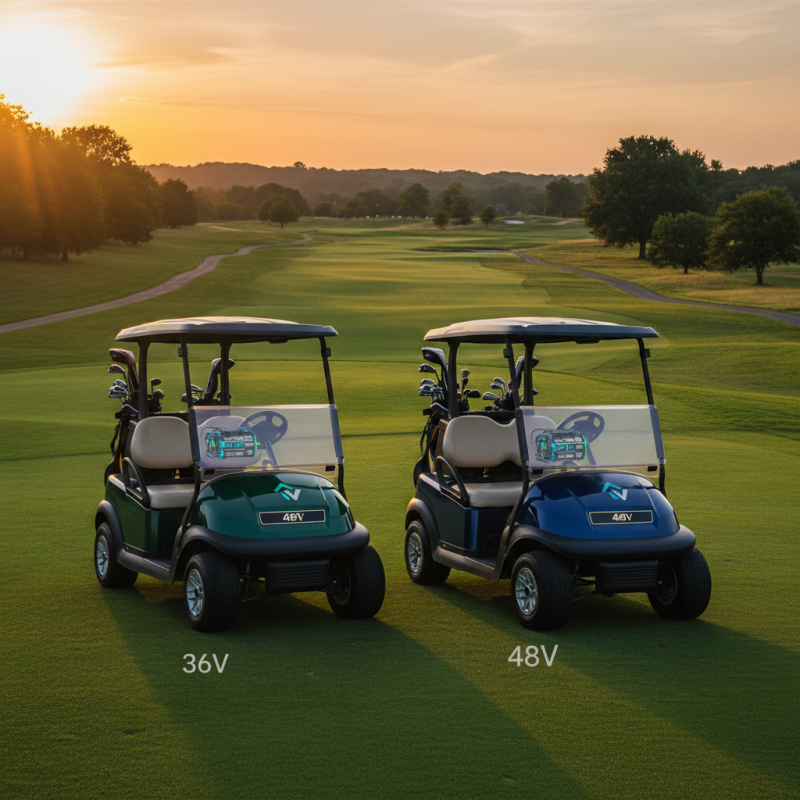
When choosing between 36v and 48v golf carts, understanding voltage differences is crucial. The main distinction lies in power output. A 48v cart generally offers better speed and torque. This can be essential for hilly terrains. In contrast, 36v carts may have a longer range but are less powerful.
Consider your typical usage. If you often play on flat courses, a 36v cart might suit you. However, if hilly paths are common, leaning towards 48v can enhance your experience. Charging times also differ. A 48v system may recharge faster, which might be beneficial in busy days.
Tips: Ensure you assess the terrain where you'll be driving. Test both options if possible. Think about the weight and cargo. Will you carry passengers or equipment?
Remember, both systems have their pros and cons. A 36v cart may be okay for occasional use, while a 48v model might serve better for frequent players. Understanding these differences will help ensure you make a choice that best fits your golfing needs.
When selecting between 36v and 48v golf carts, evaluating your driving range needs is crucial. The voltage level directly affects the distance a golf cart can travel on a single charge. A 36v cart typically manages a range of around 20 to 25 miles. This can be sufficient for a standard 18-hole golf course. However, if you frequently traverse larger courses or prefer additional mileage, a 48v option may be advantageous.
These carts can cover anywhere from 25 to 30 miles or more. This additional range can be decisive for golf outings where you're away from charging stations. It’s also vital to consider the terrain. Steeper courses may drain battery life faster. If you often play on hilly terrains, a 48v cart might be a better choice.
Think about how often you plan to use the cart. Occasional golfers may find 36v sufficient. Regular players, on the other hand, might regret not opting for a higher voltage. Reflect on your typical distances and the number of passengers too. More weight can impact range significantly. Understanding your specific requirements will guide you to the right decision.
When choosing between 36v and 48v golf carts, consider how each voltage affects performance. Generally, 48v systems deliver more power than 36v systems. According to industry reports, 48v golf carts can reach speeds of up to 25% faster. This can be beneficial in larger courses or when navigating hilly terrain.
Power needs largely depend on usage. A 36v cart is often sufficient for flat, short courses. However, if you require greater range and power, a 48v system is preferable. It's common to see a 48v golf cart offering a higher torque output, which is essential for steep inclines. But, this increased power may lead to reduced efficiency in smaller, flat areas.
Tip: Evaluate your typical usage environment before making a decision. Conduct tests with both types of carts if possible for a hands-on experience.
Also, consider battery longevity. While 48v systems may have a higher upfront cost, their efficiency can result in cost savings over time. With a proper charging routine, the longevity of both systems can significantly improve, reducing the need for frequent replacements thereafter.
When considering the cost of golf carts, the price difference between 36v and 48v models can be significant. Generally, 36v carts are cheaper upfront. They often range from $5,000 to $10,000, depending on the model and features. However, don’t overlook performance aspects. The lower voltage may result in limited speed and range. If you play on hilly courses, this might impact your experience.
On the other hand, 48v carts usually come with a higher price tag, starting around $7,000. They provide better acceleration and can cover more distance on a single charge. If you frequently play or drive longer distances, the investment can be worth it. Always consider maintenance costs as well. Higher voltage carts may require more expensive batteries, but they often last longer. This could balance out the initial purchase price in the long run.
Ultimately, reflect on your specific needs. Think about how often you use the cart and the terrains you encounter. A less powerful 36v cart might suffice for flat, short courses. Alternatively, a 48v model could enhance your golfing experience on challenging terrains. The decision may lean more on your playing habits than on price alone.
When choosing between 36v and 48v golf carts, battery maintenance plays a crucial role in decision-making. A study from the National Golf Cart Manufacturers Association indicates that 48v systems typically provide longer life cycles compared to their 36v counterparts. In practical terms, 48v batteries often require less frequent recharging, leading to reduced wear and prolonged overall lifespan. The average lifespan of a 48v battery can exceed 1,000 cycles with proper care, while 36v batteries average around 800 cycles.
Maintenance habits also affect longevity. Regularly checking battery water levels is essential. Overcharging can be detrimental for both types, but it is particularly damaging to the 36v system, which has a higher risk of sulfation. Experts recommend using a smart charger that adjusts voltage. This can enhance battery health and efficiency. While 48v systems might offer better longevity, initial costs are generally higher.
A notable detail in choosing the right voltage is the electrical load. If your usage includes steep hills or heavy loads, the 48v system may perform better under stress. Evaluating your specific needs will directly impact your decision. Balancing cost and performance truly requires reflection on your typical usage patterns. This insight can lead to smarter purchasing decisions.
| Feature | 36V Golf Cart | 48V Golf Cart |
|---|---|---|
| Top Speed | 15-20 mph | 20-25 mph |
| Range per Charge | 20-25 miles | 25-35 miles |
| Weight | Approximately 400 lbs | Approximately 450 lbs |
| Battery Life | 2-4 years | 4-6 years |
| Maintenance | More frequent | Less frequent |
| Cost | Lower initial cost | Higher initial cost |
: The main difference is power output. A 48v cart generally provides better speed and torque.
A 48v cart is preferred for hilly terrains due to its enhanced power.
A 48v system typically recharges faster, which is useful for busy days.
A 36v cart usually travels about 20 to 25 miles on a single charge.
A 48v cart can cover 25 to 30 miles or more, ideal for larger courses.
Yes, steep courses may drain battery life faster, affecting your choice.
Regular players might regret choosing a 36v cart if they play often.
Yes, carrying more weight significantly affects the driving range of your cart.
For occasional golfers, a 36v cart may meet their needs effectively.
Assess your typical distances and the number of passengers for better guidance.
Choosing between 36v and 48v golf carts involves understanding the key differences in performance, driving range, and maintenance. When considering what is the difference between 36v and 48v golf carts, it's essential to evaluate your specific driving range requirements, as the higher voltage system typically offers increased range and power, making it suitable for more extensive golf courses or hilly terrains.
Additionally, power needs play a crucial role; 48v systems generally provide better acceleration and climbing ability compared to 36v systems. Cost is another important factor; while 48v carts may have a higher initial investment, their longer battery life and enhanced performance can lead to savings in the long run. Finally, maintenance considerations also vary, with both systems requiring diligence but differing in battery longevity. Understanding these aspects will help you choose the right golf cart to meet your needs.

Volt Golf