How to Choose Lithium Batteries for Your Golf Cart?

Time:2026-06-04 Author:Madeline
0%

In the world of golf carts, choosing the right battery is crucial. As electric vehicles gain popularity, many owners are turning to lithium batteries. But why are lithium batteries better for golf carts? According to electric vehicle expert Dr. Emily Carter, “Lithium batteries offer superior performance and longer life compared to traditional lead-acid options.” This statement emphasizes the benefits that lithium technology brings to golf cart functionality.

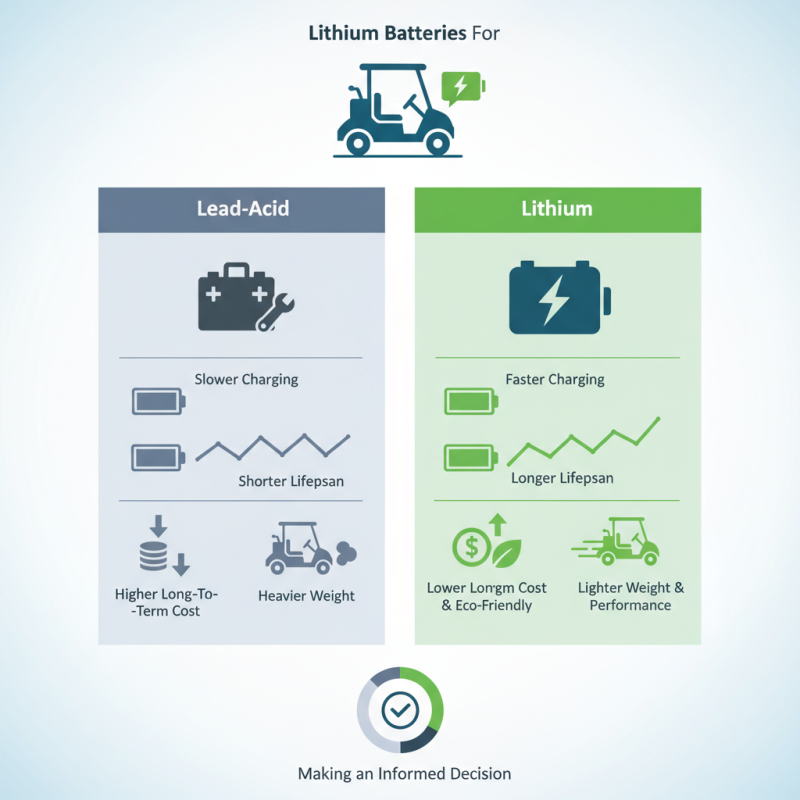
Lithium batteries deliver consistent power and faster charging, making them more efficient for daily use. They significantly reduce the weight of the cart, enhancing speed and maneuverability. Moreover, these batteries have a longer lifespan, often lasting several years longer than traditional batteries. However, some users may worry about the initial cost. While the upfront investment is higher, the long-term savings from reduced maintenance and replacement costs can be significant.

Golf cart enthusiasts increasingly seek reliable and efficient energy sources. Understanding "why are lithium batteries better for golf carts" is key to making an informed decision. The benefits extend beyond performance, contributing to a more eco-friendly golfing experience. Still, potential buyers should weigh the pros and cons carefully to ensure they make the right choice for their needs.
How to Choose Lithium Batteries for Your Golf Cart?

Factors to Consider When Choosing Lithium Batteries for Golf Carts

When selecting lithium batteries for your golf cart, several critical factors come into play. Battery capacity, measured in amp-hours (Ah), is essential for determining how long you can run your cart between charges. A typical golf cart may require batteries with a capacity between 100-200 Ah. Choosing the right capacity is crucial, as insufficient capacity may lead to unexpected downtime.

Weight and size are equally important. Lithium batteries are lighter than traditional lead-acid types. This advantage improves efficiency and enhances performance. However, ensure the battery dimensions fit your cart's designated space. Compatibility helps maintain optimal performance and safety. Research suggests that lighter batteries can improve the cart's speed and handling.

Additionally, consider the charge cycles of lithium batteries. A quality lithium battery can endure up to 2,000 cycles, significantly outliving lead-acid versions, which average only 500 cycles. This longevity translates to fewer replacements and lower long-term costs. Yet, this high performance comes with a price, often making initial investments appear daunting. Carefully evaluate your needs and how often you use your cart to determine if the investment is worthwhile.

Understanding Different Types of Lithium Batteries Available for Golf Carts

When selecting lithium batteries for your golf cart, it's essential to understand the available types. Lithium iron phosphate (LiFePO4) batteries are popular for their thermal stability. They have a longer lifespan than traditional lead-acid batteries, lasting up to ten years or more. Their weight is also significantly lighter, making them easier to manage.

Another option is lithium nickel cobalt manganese (NCM) batteries. These batteries offer higher energy density. They are ideal for performance but may come with a higher price. Both types have distinct advantages but also limitations. For example, NCM batteries need proper thermal management to prevent overheating.

Before making a decision, consider your usage patterns. Think about how often you play and the distances you travel. You might need a battery with a higher capacity if you play regularly or have a larger course to navigate. Weigh these details carefully. Making the wrong choice could lead to performance issues or unsatisfactory lifespan.

Assessing the Capacity and Range Requirements for Your Golf Cart

When selecting lithium batteries for your golf cart, consider the power and range your specific needs require. Assessing these factors ensures you’ll have a reliable source of energy on the course. The capacity of a battery is expressed in amp-hours (Ah). A higher Ah rating generally means more stored energy and longer run times.

Tip: Think about your golfing routine. Do you usually play multiple rounds in a day? If so, a battery with a higher capacity may be essential. Additionally, evaluate how far you typically drive your cart on a single charge. Knowing the distance will guide you to the right battery choice.

Range is also influenced by terrain and weight. Hilly courses require more power than flat ones. If you frequently navigate inclines, factor this into your calculation. Every cart's efficiency varies widely based on load and driving style.

Tip: Consider using a digital battery monitor. It can help track your usage and battery health. This insight allows you to adjust your habits for optimal performance. Each golf outing should be enjoyable and stress-free, so ensure your battery meets your specific needs.

Evaluating Battery Weight and Size for Optimal Performance in Golf Carts

When choosing lithium batteries for golf carts, weight and size play a crucial role in performance. A well-balanced cart enhances maneuverability. Lithium batteries, typically lighter, can weigh around 50-60 pounds compared to traditional lead-acid batteries, which can exceed 100 pounds. This significant weight reduction not only improves handling but also increases efficiency. A study by the Batteries Research Institute highlights that lighter batteries can improve energy utilization by up to 30%.

Size matters in golf carts. Standard golf cart battery compartments are often designed for lead-acid batteries. However, lithium batteries can be compact, offering more space flexibility. A well-designed battery can allow for better weight distribution, ensuring optimal stability during play. According to the Electric Vehicle Association, an increasing number of golf courses report that well-optimized battery placements enhance overall cart performance and user experience.

It's important to consider the trade-offs as well. While lithium batteries offer many advantages, their upfront cost can be higher. Additionally, users may find variations in battery life based on their size. The capacity and power needs must align with the specific cart model. Reflecting on these aspects ensures that players don’t face unexpected challenges on the course. Careful evaluation of weight and size can lead to informed decisions that enhance golfing experiences.

Battery Weight and Size for Golf Carts

This chart illustrates the weight of different sizes of lithium batteries typically used in golf carts. Choosing the right battery weight is crucial for optimizing performance and ensuring your golf cart operates efficiently.

Analyzing Cost versus Benefits of Lithium Batteries for Golf Cart Usage

Choosing the right lithium battery for a golf cart involves weighing costs against benefits. Lithium batteries often come with a higher upfront cost compared to traditional lead-acid options. However, their lifespan is significantly longer. A typical lithium battery can last up to 10 years or more, while lead-acid batteries usually require replacement every 2 to 4 years. This longevity means that over time, the initial investment can lead to savings.

Another factor to consider is performance. Lithium batteries provide consistent power, even when charging. This results in better acceleration and speed. In contrast, lead-acid batteries can experience voltage drops, affecting performance on the course. It's worth noting that lithium batteries are also lighter, which can enhance the overall efficiency of the golf cart.

Despite these advantages, buyers should reflect on their specific needs. Not every golfer will benefit from the investment in lithium technology. Factors such as frequency of use and budget constraints are important. A casual user might find lead-acid batteries sufficient for their needs. Ultimately, the decision should be based on a thorough evaluation of both the costs and potential benefits for personal use.

FAQS

: What are the main types of lithium batteries available for golf carts?

: The two main types are lithium iron phosphate (LiFePO4) and lithium nickel cobalt manganese (NCM) batteries.

How long can lithium iron phosphate batteries last?

They can last up to ten years or more, significantly longer than traditional lead-acid batteries.

What is an advantage of NCM batteries?

NCM batteries have a higher energy density, providing better performance for users.

Are lithium batteries more expensive upfront?

Yes, lithium batteries generally have a higher initial cost compared to lead-acid options.

How does the lifespan of lithium batteries compare to lead-acid batteries?

Lithium batteries last around 10 years, while lead-acid batteries need replacement every 2 to 4 years.

What should users consider before choosing a battery?

Users should reflect on their usage patterns, frequency of play, and budget constraints.

Do lithium batteries affect the performance of golf carts?

Yes, they provide consistent power, improving acceleration and speed on the course.

Can NCM batteries overheat?

Yes, NCM batteries require proper thermal management to prevent overheating issues.

Are lithium batteries lighter?

Yes, they are significantly lighter than lead-acid batteries, enhancing overall golf cart efficiency.

Is lithium technology suitable for every golfer?

No, casual users might find lead-acid batteries meet their needs without the higher investment.

Conclusion

When choosing lithium batteries for your golf cart, several key factors should be considered to ensure optimal performance. Understanding the different types of lithium batteries available is crucial, as each offers unique benefits tailored to specific golf cart needs. Additionally, assessing the capacity and range requirements can help you determine how long your golf cart will run on a single charge, while evaluating the weight and size of the battery is essential for maintaining the cart's handling and efficiency.

A critical aspect of this decision-making process is analyzing the cost versus benefits. One might wonder, "why are lithium batteries better for golf carts?" The answer lies in their superior energy density, longevity, and reduced maintenance compared to traditional lead-acid batteries. These advantages not only enhance the overall performance but also provide long-term savings, making lithium batteries a worthwhile investment for golf cart users.

Madeline

Madeline

Madeline is a dedicated marketing professional with a wealth of expertise in our company's core offerings. With a keen understanding of the industry, she brings a unique perspective to her role, consistently delivering high-quality content that highlights the superior aspects of our products. As......