How to Choose Lithium Batteries for Golf Carts

Time:2026-10-19 Author:Sophia
0%

Choosing the right golf cart battery is more than comparing prices and advertised range. A practical decision starts with the cart’s voltage, motor demands, daily distance, terrain, and charging habits. A flat course, a steep neighborhood road, and a commercial resort create very different battery loads. Check the manufacturer’s specifications before replacing anything.

So, why are lithium batteries better for golf carts? They usually weigh less, provide steadier power, charge faster, and deliver more usable capacity than traditional lead-acid batteries. A lithium pack can make a cart feel more responsive, especially when climbing a hill with passengers. Its battery management system can also monitor voltage, temperature, and charging limits. Still, no battery is perfect. Poor installation, incorrect charging equipment, or extreme heat can reduce performance. Lithium technology also costs more initially.

Dr. Jeff Dahn, a respected lithium-ion battery researcher, has said, “The battery is the heart of the electric vehicle.” His point applies to golf carts as well. The battery influences acceleration, travel distance, maintenance, and long-term operating cost. However, buyers should examine evidence rather than trust impressive claims. Compare cycle-life ratings, warranty terms, continuous current output, charger compatibility, and safety certifications. Ask whether the warranty covers commercial use and hot storage conditions. Small details matter.

A suitable battery should match the cart, not merely fit inside it. This guide explains how to assess those details with a technician’s perspective. It also acknowledges an uncomfortable truth: the cheapest choice today may become the most expensive choice later.
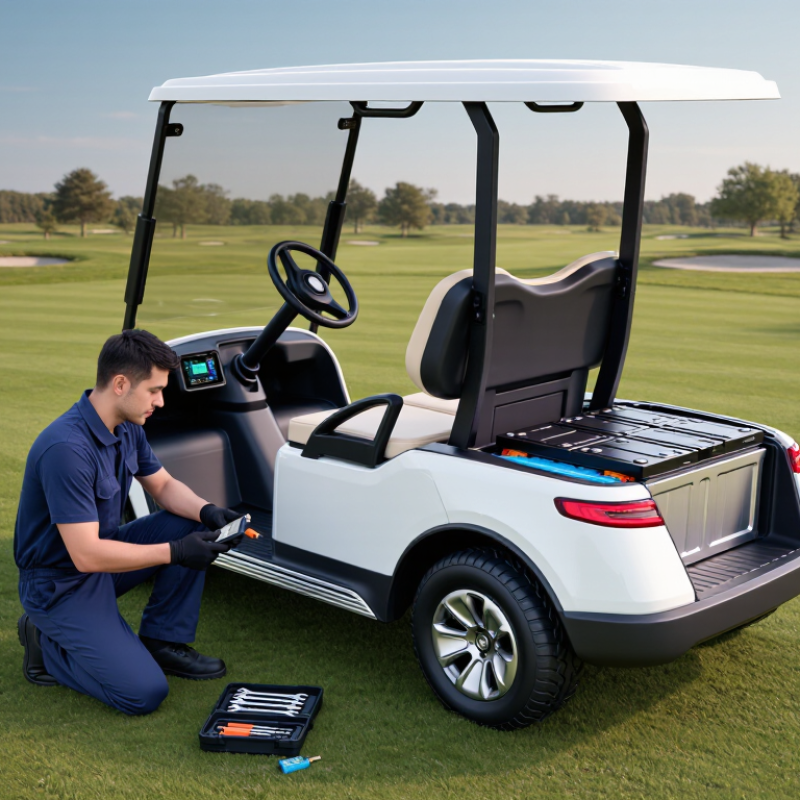
How to Choose Lithium Batteries for Golf Carts

Understanding Golf Cart Lithium Battery Types and Chemistry

How to Choose Lithium Batteries for Golf Carts

Understanding battery chemistry matters more than comparing amp-hour numbers alone. Lithium iron phosphate, or LFP, is common for golf carts because it offers strong thermal stability and long service life. The International Energy Agency reported that LFP represented about 40% of the global electric-vehicle battery market in 2023. That figure reflects the wider industry, not golf carts, but it shows growing confidence in this chemistry.

Nickel-manganese-cobalt, or NMC, stores more energy in a smaller, lighter package. This can help carts carrying passengers on long routes. However, NMC usually demands stricter thermal management and careful charging controls. Lithium titanate, or LTO, handles frequent fast charging and cold conditions well. Its lower energy density and higher cost can limit practical use.

Check the battery management system, cell balancing, charger compatibility, and enclosure rating. Chemistry alone does not guarantee safety. Independent testing standards, such as UL 2580, evaluate electric-vehicle battery safety under electrical, mechanical, and thermal stresses. In real inspections, loose terminals and poor ventilation can matter more than impressive capacity claims. A useful warning: advertised cycle life often uses gentle laboratory conditions. Your steep course, heavy cart, and partial charging may produce different results.

How to Choose Lithium Batteries for Golf Carts: Understanding Battery Types and Chemistry

Cycle life indicates the approximate number of complete charge and discharge cycles a battery can provide before its capacity decreases significantly. Lithium iron phosphate (LFP) is widely preferred for golf carts because of its strong thermal stability, long service life, and good safety profile. Nickel manganese cobalt (NMC) offers higher energy density but generally has a shorter cycle life and requires more careful thermal management. Lithium titanate (LTO) provides exceptional cycle life and fast charging capability, but its lower energy density and higher cost can limit its use in standard golf carts.

The values shown are typical industry ranges under controlled laboratory conditions. Actual performance depends on battery size, discharge depth, charging method, operating temperature, load, and maintenance.

Matching Battery Voltage and Capacity to Your Golf Cart

How to Choose Lithium Batteries for Golf Carts

Matching voltage and capacity to your golf cart prevents weak performance and unnecessary replacement costs. Check the cart’s original system voltage before choosing a battery. Common systems use 36 or 48 volts, but some models differ. Lithium batteries should match the required voltage, not simply fit inside the battery compartment. A mismatched voltage can damage the controller or create unsafe operating conditions. Also inspect the charger, cables, and connection terminals. The charger must support the battery’s chemistry and voltage range.

Capacity is usually listed in amp-hours, or Ah. Higher Ah generally provides longer driving distance, but actual range depends on passenger weight, hills, tire pressure, speed, and temperature. A lightly loaded cart on flat paths needs less energy than a work cart climbing rough terrain. I have seen buyers focus only on Ah ratings and overlook continuous current output. That mistake can cause sluggish starts, especially on steep ground. Check the battery management system’s discharge rating before purchasing.

Tips: Record your usual route and load for one week. Note distance, hills, and charging frequency. Then compare those details with the battery’s usable capacity, not only its advertised Ah figure. Leave physical space for ventilation, wiring, and secure mounting. This is easy to miss. If your cart uses an older charger, replacement may be necessary; verify compatibility with a qualified technician rather than guessing.

Checking Battery Size, Compatibility, and Installation Requirements

Choosing a lithium battery for a golf cart begins with physical measurements, not marketing claims. Measure the battery compartment’s length, width, and height, including cable clearance. A 48-volt cart usually needs a 48-volt battery system, but voltage alone is not enough. Check continuous current, peak current, connector type, and the motor controller’s limits. An undersized battery may cut out on hills.

The battery management system must communicate safely with the charger and cart electronics. Confirm the charger’s output voltage and charging profile before installation.

The U.S. Department of Energy reports that lithium-ion systems commonly achieve about 85–95% round-trip efficiency, but real performance depends on temperature, wiring, and controls. The International Energy Agency also identifies lithium iron phosphate as a growing chemistry because of its durability and thermal stability in 2024 battery-market data. That does not make every pack suitable.

Installation needs careful attention. Use the supplied brackets or a secure nonconductive tray, and prevent movement during braking. Inspect terminal polarity twice. A loose connection can create heat.

Keep ventilation and service access available, even when the battery requires less maintenance than lead-acid units. In practical workshop checks, weight reduction can improve handling, yet it may alter cart balance. This detail is easy to miss.

The battery’s datasheet should state dimensions, usable capacity, discharge limits, protection features, and operating temperatures. If any figure is missing, pause before buying. Manufacturer claims are not a substitute for compatibility testing.

Comparing Battery Lifespan, Charging Systems, and Safety Features

Choosing a golf cart battery starts with lifespan, not purchase price. Flooded lead-acid batteries often deliver about 500–1,000 cycles. Lithium batteries commonly reach 2,000–4,000 cycles under controlled conditions. These figures come from industry testing ranges, not guarantees. Heat, deep discharge, and poor storage can shorten either type. The U.S. Department of Energy’s 2023 Energy Storage Technology and Cost Characterization Report places lithium-ion round-trip efficiency near 85–95%. That means less energy is lost during charging.

Charging systems must match the battery chemistry. A lithium pack needs a charger with the correct voltage profile and communication settings. Its battery management system can stop charging during overtemperature or overvoltage events. Lead-acid systems tolerate more charger variation, but they need longer charging times and regular full-charge periods. An overnight charge may be practical, yet repeated partial charging can encourage sulfation. This is easy to overlook.

Tips: Check the charger’s output before installation. Measure pack voltage with a qualified technician. Keep terminals dry and cables firmly secured. For lithium batteries, choose thermal monitoring and cell balancing. IEC 62619 guidance emphasizes protection against overheating, overcharge, and short circuits. The National Fire Protection Association also stresses suitable charging areas, ventilation, and damage inspection. No safety feature removes every risk. I would not trust a battery simply because it feels modern. A damaged case, unusual heat, or sharp chemical smell deserves immediate attention.

How to Choose Lithium Batteries for Golf Carts: Comparing Battery Lifespan, Charging Systems, and Safety Features
Evaluation Dimension Lithium Iron Phosphate (LFP) Nickel Manganese Cobalt (NMC) Lithium Titanate (LTO) What to Check Before Buying
Typical Nominal Cell Voltage Approximately 3.2 V per cell Approximately 3.6–3.7 V per cell Approximately 2.3–2.4 V per cell The battery pack voltage must match the golf cart system, such as 36 V, 48 V, or 72 V.
Typical Cycle Life Approximately 2,000–5,000 cycles when properly operated Approximately 1,000–2,000 cycles under comparable conditions Approximately 10,000–20,000 cycles, depending on the design and operating conditions Ask whether the stated cycle life is measured at a defined depth of discharge, temperature, and end-of-life capacity level.
Expected Service Life Commonly about 5–10 years in golf-cart service Commonly about 3–7 years in golf-cart service Potentially 10–20 years, but availability and system cost may be less favorable Actual life depends on charge frequency, storage temperature, discharge depth, maintenance, and charger compatibility.
Usable Depth of Discharge Often suitable for approximately 80–90% usable discharge when managed by a battery management system Often operated around 80% usable discharge to balance performance and service life Can tolerate very high discharge rates and deep cycling when correctly engineered Do not select a battery solely by rated amp-hours; compare usable energy and the manufacturer’s discharge limits.
Energy Efficiency Typically about 90–98% round-trip efficiency Typically about 90–95% round-trip efficiency Typically about 90–98% round-trip efficiency Higher efficiency generally means less energy lost as heat during charging and discharging.
Charging System Requires a lithium-compatible constant-current/constant-voltage charger matched to the pack voltage Requires a charger specifically configured for the pack’s voltage, chemistry, and battery management system Requires a dedicated charger because its voltage profile differs from LFP and NMC systems Do not use a charger designed only for lead-acid batteries unless the battery manufacturer explicitly confirms compatibility.
Typical Charging Time Approximately 3–6 hours with a properly sized charger Approximately 3–6 hours with a properly sized charger Approximately 1–4 hours with a compatible high-current charging system Charging time depends on battery capacity, charger output, state of charge, temperature, and charging limits.
Opportunity Charging Generally suitable, provided charging voltage and temperature limits are respected Confirm that the battery management system supports repeated partial charging without triggering faults.
Low-Temperature Charging Charging below 0°C can cause lithium plating unless the system includes low-temperature charge protection or heating Charging below 0°C also requires strict protection and appropriate control Usually offers better low-temperature charging performance, but the specified limits still apply Look for a temperature sensor, charge cutoff, and—where needed—integrated battery heating.
Battery Management System Should provide the same core protections, with careful thermal monitoring Should provide cell balancing, voltage control, current protection, and thermal monitoring Verify the continuous and peak current ratings and whether the system communicates with the charger or cart controller.
Thermal Safety Higher energy density but generally more sensitive to abuse, overheating, and thermal runaway Very strong thermal stability and low risk of thermal runaway when correctly manufactured and protected Choose a pack with certified cells, robust enclosure design, thermal sensors, and documented safety testing.
Weight Compared with Lead-Acid Usually about 40–60% lighter for a comparable usable-energy system Usually about 40–65% lighter for a comparable usable-energy system Weight savings vary because additional cells may be required for the desired pack voltage Check mounting points, vehicle balance, cable length, and whether the cart requires a counterweight.
Maintenance Requirements No watering or routine electrolyte maintenance; inspect the enclosure, terminals, and wiring No watering or routine electrolyte maintenance; inspect connections and protection systems Maintenance-free does not mean inspection-free. Follow the storage, cleaning, and inspection schedule.
Storage Guidance Store in a cool, dry location at the manufacturer’s recommended state of charge and disconnect unnecessary loads Store in a cool, dry location away from heat sources and monitor the state of charge periodically Store according to the battery manufacturer’s voltage and temperature limits Prevent prolonged storage at 0% or 100% state of charge, and avoid charging a frozen battery.
Best General Use Case Useful when low weight and high energy density are priorities and advanced thermal protection is available Best for intensive commercial use, rapid charging, and very high cycle requirements For most private and recreational carts, prioritize an appropriately sized LFP pack with a high-quality charger and BMS.
Key Buying Warning Do not compare batteries by chemistry alone. Confirm pack voltage, continuous and peak current, usable capacity, charger profile, BMS protections, enclosure rating, installation requirements, and applicable electrical safety certifications. Specifications vary by design and operating conditions. Always follow the battery and golf-cart manufacturer’s installation and charging instructions.

Evaluating Cost, Warranty, Maintenance, and Long-Term Value

How to Choose Lithium Batteries for Golf Carts

Evaluating Cost, Warranty, Maintenance, and Long-Term Value

Lithium batteries often cost more initially, but purchase price tells only part of the story. Compare usable energy, expected cycle life, installation needs, and charging efficiency. A battery with higher capacity may reduce charging frequency during busy weekends. Confirm that its voltage matches the cart and that the charger is compatible. Otherwise, savings can disappear quickly.

Read the warranty carefully. Coverage length matters, but exclusions matter more. Some policies limit coverage for deep discharge, incorrect charging, water damage, or unauthorized installation. Read the exclusions. Ask whether service requires shipping the battery away. A clear warranty should explain replacement terms, labor coverage, and performance limits. Keep receipts and installation records for future claims.

Maintenance is usually simpler than with lead-acid batteries. There is no routine watering, and corrosion is typically less troublesome. Still, lithium batteries need sensible care. Avoid leaving the cart fully discharged, inspect cables periodically, and store the battery in a dry, moderate-temperature area. A built-in battery management system adds protection, but it cannot correct poor charging habits. Long-term value also depends on weight, downtime, and replacement access. It is easy to underestimate those costs. A slightly cheaper battery may seem attractive, yet difficult service can make it the less practical choice. A careful buyer should calculate cost per usable year, not just the checkout total.

FAQS

How do I choose the correct voltage for a golf cart battery?

Check the cart’s original system voltage first. Common systems use 36 or 48 volts. Some models differ. The battery voltage must match the cart’s requirements, not just the compartment size. Incorrect voltage may damage the controller or create unsafe operation.

What does battery capacity mean for driving distance?

Capacity is usually measured in amp-hours, or Ah. Higher Ah often supports longer travel. Actual range also depends on passenger weight, hills, tire pressure, speed, and temperature. A light cart on flat paths uses less energy than a loaded cart climbing rough ground.

Why should I check continuous current output?

Ah ratings do not tell the whole story. Continuous current affects starting strength and hill performance. A battery with weak output may feel sluggish on steep ground. Check the battery management system’s discharge rating before purchasing.

How can I estimate the capacity I really need?

Record your usual route and load for one week. Note distance, hills, and charging frequency. Compare those details with usable capacity, not only advertised Ah. Real life is messier than the label.

Does the charger need to match the battery?

Yes. The charger must support the battery’s chemistry and voltage range. Lithium batteries usually require a suitable charging profile and communication settings. An older charger may need replacement. Verify compatibility with a qualified technician instead of guessing.

How long can lithium and lead-acid batteries last?

Flooded lead-acid batteries often provide about 500 to 1,000 cycles. Lithium batteries commonly provide about 2,000 to 4,000 cycles under controlled conditions. These are testing ranges, not promises. Heat, deep discharge, and poor storage can shorten either battery’s life.

What safety features should a lithium battery include?

Look for overcharge, overtemperature, short-circuit, and cell-balancing protection. Thermal monitoring is also useful. A battery management system can stop unsafe charging or discharging. It cannot repair damaged cables or careless charging habits.

What physical checks should I complete before installation?

Leave space for ventilation, wiring, and secure mounting. Inspect cables and connection terminals. Keep terminals dry and firmly tightened. Stop using the battery if its case is damaged, unusually hot, or smells sharply chemical.

How should I compare battery warranties and long-term cost?

Read exclusions for deep discharge, incorrect charging, water damage, and unauthorized installation. Confirm replacement terms, labor coverage, and shipping responsibilities. Keep receipts and installation records. Calculate cost per usable year, not only the checkout price.

What maintenance does a lithium golf cart battery require?

Lithium batteries usually need no watering and create less corrosion. Avoid leaving the battery fully discharged. Inspect cables periodically and store the cart in a dry, moderate-temperature area. Maintenance is simpler, not nonexistent.

Conclusion

Choosing the right lithium battery for a golf cart starts with understanding battery chemistry, voltage, and capacity. Select a battery that matches your cart’s required voltage and offers enough amp-hour capacity for your expected driving distance, terrain, passenger load, and usage frequency. Before purchasing, check the battery’s dimensions, terminal layout, cable connections, and mounting requirements to confirm a smooth installation. It is also important to verify whether your existing charger is compatible or if a suitable charging system is needed.

Many users ask, “why are lithium batteries better for golf carts?” They typically provide a longer service life, lighter weight, faster charging, more consistent power, and lower maintenance than traditional alternatives. Look for built-in safety protections, reliable battery management, temperature control, and clear operating instructions. Finally, compare the purchase price with warranty coverage, charging costs, maintenance needs, expected lifespan, and overall performance to determine the best long-term value for your golf cart.

Sophia

Sophia

Sophia is a dedicated marketing professional with an exceptional depth of knowledge about her company's products and services. With a keen understanding of market trends and customer needs, she crafts insightful blog posts that not only inform but also engage readers, enriching the company’s online......