Choosing a trailer for a golf cart seems simple until the measurements disagree. A standard cart may look compact, yet its roof, rear seat, windshield, or lift kit can add several inches. If you are asking, “what size trailer do i need for a golf cart,” begin with the cart itself, not the trailer label.
Measure the cart’s total length, width, and height. Include the tires, steering wheel, roof, and rear accessories. A typical two-seat golf cart may fit on a 5-by-10-foot trailer, but larger models often need more deck space. Leave room for loading and tie-down points. Crowded equipment is harder to secure safely.
Weight matters just as much. Check the cart’s actual weight, then include batteries, cargo, ramps, and accessories. Compare that total with the trailer’s rated capacity. The towing vehicle must also handle the combined load, tongue weight, and trailer equipment. Manufacturer specifications provide the most reliable starting point.
Small details can cause trouble.
For example, a ramp may reduce usable deck space when folded. A tailgate can also interfere with the cart’s rear seat. These are easy mistakes, even for careful owners. Rechecking every measurement before purchase is worthwhile. A slightly longer and wider trailer may offer better balance, safer tie-down placement, and easier loading. However, bigger is not automatically better. The right choice matches the cart, towing vehicle, storage area, and real driving conditions.
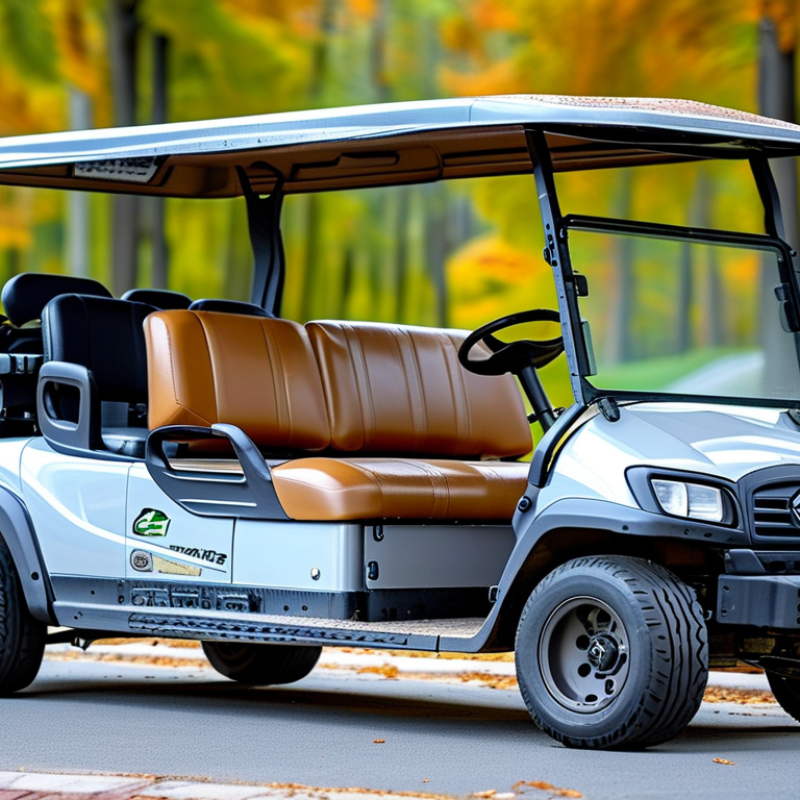
How to Know What Size Trailer You Need for a Golf Cart?
Assess Your Golf Cart’s Dimensions and Weight
Begin with a tape measure, not a guess. Record the cart’s overall length, width, height, and wheelbase. Include rear seats, cargo boxes, windshields, and roof extensions. Industry specification surveys commonly place standard golf carts near 48 inches wide and 90 to 100 inches long. Modified models can exceed those measurements quickly.
Weigh the cart with batteries, accessories, and normal cargo installed. Lead-acid batteries may add several hundred pounds. Lithium systems usually reduce weight, but the difference depends on the battery pack. The U.S. Department of Energy’s Alternative Fuels Data Center reports that battery weight strongly affects electric vehicle efficiency and payload planning. Your trailer must support the complete loaded weight, not the cart’s advertised dry weight.
Check the trailer’s internal dimensions and payload rating separately. A trailer may fit the cart but still lack sufficient capacity. NHTSA classifies low-speed vehicles below 3,000 pounds GVWR, but that figure does not determine a trailer’s safe payload. Leave clearance around the tires and body. Four to six inches on each side is a practical working margin. Remember ramp angle, too.
I once measured only the roof height. That mistake nearly caused contact with a trailer’s rear gate. Measure twice. Confirm the trailer’s axle, tires, coupler, and brakes match the loaded weight. Allow extra capacity for tools, ramps, tie-downs, and spare batteries. (Sources: U.S. DOE Alternative Fuels Data Center; NHTSA, Federal Motor Vehicle Safety Standards.)
Assess your golf cart’s dimensions and weight before choosing a trailer. The chart below uses representative planning values for common two-, four-, and six-passenger golf carts.
How to use this chart: Choose a trailer deck that is longer and wider than your golf cart. As a practical starting point, allow approximately 2 feet of extra deck length and at least 6 inches of clearance on each side. The trailer’s payload rating must exceed the golf cart’s curb weight plus batteries, accessories, ramps, and tie-down equipment.
Choose a trailer type that matches your golf cart, not just its wheelbase. Standard carts often measure about 48 inches wide and 8 to 12 feet long. Measure the cart with its roof, rear seat, windshield, and accessories installed. A narrow utility trailer may fit on paper, but loading ramps can become awkward. Real-world sizing is messier.
An open utility trailer usually works for short trips and offers easier loading. Choose a deck at least 12 inches longer than the cart and several inches wider than its widest point. A 5-by-10-foot trailer may suit a compact cart, while stretched models need a 5-by-12-foot deck. An enclosed trailer provides weather protection, but its interior height and ramp angle require closer inspection. More room is not always better.
Check the trailer’s gross vehicle weight rating before buying. Include the cart, batteries, ramps, spare tires, and stored equipment. FMCSA’s Cargo Securement Handbook requires tie-down systems to provide an aggregate working load limit equal to at least half the cargo weight. Use four rated tie-down points, chock the wheels, and keep the load centered over the axle. Do not rely on the parking brake alone. A common mistake is choosing a trailer by deck length only. That shortcut deserves reconsideration.
| Trailer Type | Typical Usable Bed Size | Golf Cart Configuration | Recommended Trailer Capacity | Recommended Tie-Down Space | Best Use |
|---|---|---|---|---|---|
| Compact Single-Cart Trailer | Approximately 10 ft × 5 ft | Two-seat golf cart without a rear seat or large cargo box | At least 1,500 lb | Allow at least 12 in of total clearance around the cart | Suitable for occasional transport of a standard compact cart |
| Standard Single-Cart Trailer | Approximately 12 ft × 6 ft | Two-seat cart with a windshield, roof, or moderate accessories | At least 2,000 lb | Allow at least 12–18 in of clearance around the cart | A practical choice for most standard golf carts |
| Extended Single-Cart Trailer | Approximately 14 ft × 6 ft | Four-seat cart, lifted cart, or cart with a rear-facing seat | At least 2,500 lb | Allow at least 18 in of clearance around the cart | Recommended when the cart is longer or has substantial accessories |
| Wide Single-Cart Trailer | Approximately 14 ft × 7 ft | Wide, lifted, or heavily accessorized golf cart | At least 3,000 lb | Allow at least 18 in of side clearance for loading and tie-downs | Useful for carts with oversized tires, wide rear seats, or cargo equipment |
| Dual-Cart Trailer | Approximately 16–18 ft × 7–8.5 ft | Two compact carts or one cart plus substantial equipment | At least 5,000 lb | Measure both carts and provide access to all tie-down points | Designed for transporting two carts when the trailer’s axle, deck, and payload ratings are adequate |
| Enclosed Trailer | Approximately 14–16 ft × 7 ft, with suitable interior height | Standard or extended cart requiring protection from weather and road debris | At least 3,000 lb | Check door opening width, interior height, ramp angle, and ventilation | Best for secure, weather-protected transport |
| Sizing reminder: Measure the golf cart with its roof, windshield, rear seat, mirrors, and other accessories installed. The trailer deck should be longer and wider than the cart, and the trailer’s payload rating must exceed the combined weight of the golf cart, batteries, accessories, and cargo. Always follow the trailer and towing vehicle manufacturer’s load limits. | |||||
Measure the golf cart, not the brochure. Typical carts measure about 4 to 5 feet wide and 8 to 12 feet long, according to dimensions reported across industry specification databases. Add at least 12 inches to the trailer’s internal length. Allow 6 inches on each side for mirrors, steering, and loading mistakes. Measure twice. Do not guess.
Clearance also includes height. Measure from the ground to the highest roof or windshield point, then add 6 to 12 inches. This helps prevent contact with the trailer roof, gate, or tie-down hardware. ANSI/ITSDF B56.8-2023 covers golf-car safety and design considerations, while the National Association of Trailer Manufacturers stresses checking deck condition, ramps, tires, and tie-down points before use. The trailer’s payload rating must exceed the cart’s weight, accessories, batteries, and cargo. SAE J2807 guidance also shows why tow ratings should be checked as a complete combination, not by trailer size alone.
Tips: Park the cart straight before measuring. Record width at the widest point. Check ramp angle, because a short trailer can scrape the underside. I once measured only the body and forgot the side mirrors. That small error changed the required width. Recheck your numbers after adding a windshield, rear seat, or storage box. A little extra room is usually cheaper than repairing a damaged cart.
Trailer capacity must match both the cart and the towing vehicle. A typical golf cart weighs about 900 to 1,200 pounds before accessories. A steel trailer may add another 300 to 500 pounds. Together, the loaded trailer can approach 1,700 pounds. Larger batteries, seats, windshields, and cargo increase that figure quickly.
Check the towing vehicle’s payload, maximum trailer rating, hitch rating, and gross combined weight rating. SAE J2807 provides standardized methods for evaluating tow performance, but your vehicle’s owner’s manual remains the controlling reference. NHTSA trailer-safety guidance also stresses correct loading, secure connections, and balanced weight distribution. Keep about 10% to 15% of the loaded trailer weight on the hitch, unless the vehicle or trailer instructions specify another figure. A trailer that looks large enough may still overload the rear axle. That mistake is easy to make.
Tips: Weigh the cart and trailer together, not separately. Place the cart centrally, with its heaviest components low and near the axle. Measure hitch height before buying. Confirm that the coupler, safety chains, tires, and brakes support the actual load. I would not rely on advertised “capacity” alone. Those figures can assume ideal conditions, and real equipment is rarely ideal. Leave a sensible margin below every rating. Don’t forget passengers and tools inside the tow vehicle; they consume payload too.
Choose a trailer by total loaded weight, not by golf-cart dimensions alone. Add the cart, batteries, accessories, ramps, and cargo. A typical electric cart can weigh about 900 to 1,200 pounds, depending on its battery system and equipment. Check the cart’s specification plate, then compare the total with the trailer’s GVWR and payload rating. Leave a practical margin. My early planning mistake would be treating the empty trailer weight as the main number.
Loading affects stability as much as capacity. NHTSA’s Towing a Trailer guidance recommends placing roughly 60% of cargo weight in the trailer’s front half. It also recommends tongue weight near 10–15% of total trailer weight. Keep heavier components low and centered. Confirm the tow vehicle’s payload, receiver rating, hitch-ball rating, and maximum tow rating. The smallest acceptable trailer may still overload the vehicle.
Safety checks should include rated wheel straps, safety chains, working lights, tire condition, and secure ramps. Do not rely on the parking brake alone. SAE J684 addresses trailer coupling performance, while FMVSS No. 108 covers many trailer lighting requirements in the United States. Registration, brakes, breakaway devices, width limits, and speed rules vary by jurisdiction. Verify them before traveling. A final walk-around is worthwhile, even when the setup looks obvious. Misjudging one battery pack can change the calculation.
Measure the actual cart, not a brochure. Record its longest length and widest point. Include mirrors, a windshield, rear seats, and storage boxes. Add at least 12 inches to the trailer’s internal length. Allow about 6 inches on each side. Measure twice. Guessing caused my earlier mistake.
Measure from the ground to the highest roof or windshield point. Add 6 to 12 inches of vertical clearance. This helps prevent contact with the trailer roof and loading hardware. Check the gate height too. Small details matter.
Many golf carts are about 4 to 5 feet wide. Choose a deck wider than the cart’s widest point. Leave space for mirrors and minor loading errors. A narrow fit may damage mirrors or tires. Extra room is usually cheaper.
Add the cart, batteries, accessories, ramps, and cargo. Many carts weigh about 900 to 1,200 pounds before additions. A steel trailer may add another 300 to 500 pounds. Compare the loaded weight with the trailer’s GVWR and payload rating. Leave a practical margin below every rating.
No. Check the vehicle’s payload, maximum tow rating, hitch rating, and combined weight limit. Passengers and tools also consume payload. The trailer may look small but still overload the rear axle. Use the vehicle manual as the controlling reference.
Place the cart centrally, with heavy components low and near the axle. Keep roughly 60% of cargo weight in the trailer’s front half. Aim for tongue weight near 10% to 15% of total trailer weight. Follow the trailer and vehicle instructions if they specify different limits. Balance matters more than appearance.
Inspect rated wheel straps, safety chains, lights, tires, ramps, and the coupler. Confirm the hitch ball and receiver support the actual load. Do not rely on the parking brake alone. Check the ramp angle to prevent underside scraping. Walk around once more. It catches obvious mistakes.
Requirements can vary by location. Check registration, brakes, breakaway equipment, lighting, width limits, and speed rules. Confirm the rules before traveling. A trailer can be mechanically ready but still unsuitable for public roads. I would not assume local requirements.
Choosing the right trailer for your golf cart starts with measuring its overall length, width, height, and weight, including any accessories or added equipment. Ask yourself, “what size trailer do i need for a golf cart?” The answer depends on more than the cart’s basic dimensions. Select a trailer style that provides a stable loading surface, then allow extra length and width for safe clearance around the cart, tires, ramps, and tie-down points. The cart should fit comfortably without hanging over the edges or obstructing the trailer’s balance.
Next, compare the trailer’s payload capacity with the golf cart’s total loaded weight and confirm that your towing vehicle and hitch are rated for the combined load. Consider ramp design, wheel chocks, tie-down locations, lighting, braking equipment, and secure loading procedures. Before traveling, inspect the trailer and verify that all required safety and registration standards in your area are satisfied. Planning these details carefully will make transport safer, steadier, and more convenient.

Volt Golf