China’s best approach to legally adjusting a golf cart speed limiter begins with safety, documentation, and local compliance. The phrase how to bypass a golf cart speed limiter can sound practical, but bypassing factory controls may create serious risks. It can affect braking distance, steering stability, motor temperature, and battery performance.
Golf-cart safety consultant Mark R. Sullivan states, “A faster cart is only safer when every connected system can support that speed.” His observation reflects a basic engineering principle. Speed changes should never be treated as an isolated controller adjustment. A qualified technician should inspect the brake cables, tires, suspension, battery pack, wiring, and manufacturer-rated limits. The cart should also be checked against local road-use requirements and site rules.
Small details matter. A worn tire can lose grip on wet pavement. A weak battery may overheat under heavier demand. An older controller may respond unpredictably. These problems are easy to overlook. That is where this topic becomes less simple than it appears.
A responsible guide should explain approved replacement parts, authorized programming methods, and inspection records. It should not provide steps for defeating safety systems. Readers should compare the owner’s manual with guidance from the manufacturer or a certified service center. Photos of the controller label, tire condition, and brake assembly can help technicians assess the cart accurately.
There is room for honest uncertainty. Models differ, and online advice may be incomplete or outdated. Legal adjustment means improving performance within verified limits, not chasing maximum speed. The safest result is controlled, documented, and reversible.
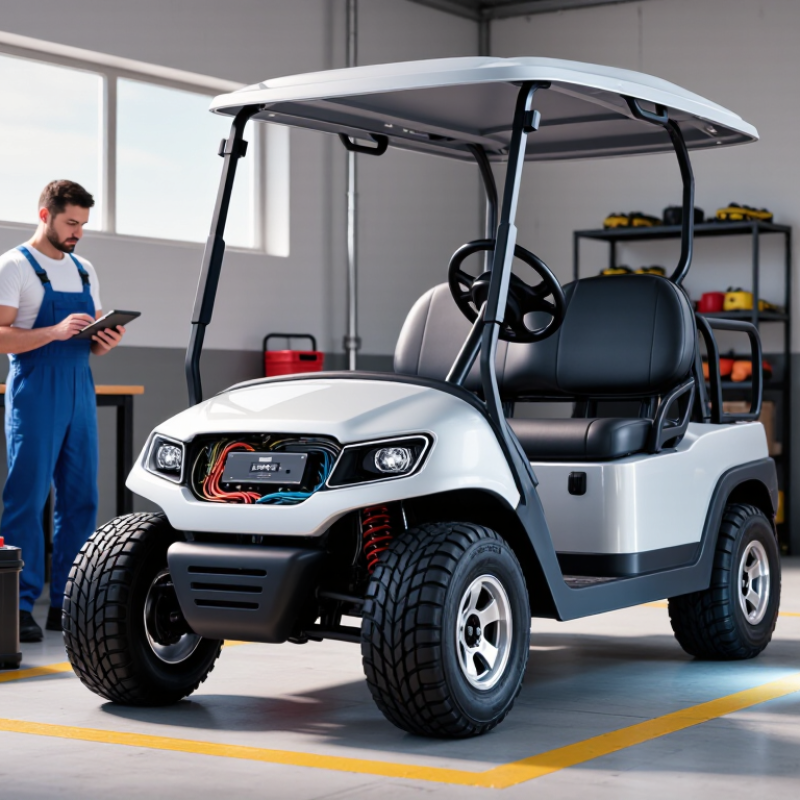
A golf cart speed limiter is not merely a comfort setting. It helps determine how the vehicle is legally classified. In the United States, NHTSA Federal Motor Vehicle Safety Standard No. 500 defines a low-speed vehicle as one designed for speeds above 20 mph and below 25 mph. Such vehicles require equipment including headlights, taillights, turn signals, mirrors, seat belts, and a windshield. Local authorities may impose stricter limits, registration rules, or road restrictions. Requirements differ by state, city, private community, and road type.
Legal adjustment should begin with the vehicle’s official specifications and the destination’s written rules. A qualified technician can test the limiter, confirm the actual maximum speed, and document the setting. A speedometer reading on level pavement is useful, but it is not enough by itself. Tire size, battery condition, passenger weight, and slopes can change results. NHTSA’s standard is precise, yet real-world enforcement can feel less precise. That gap deserves attention. Do not bypass the limiter or increase speed beyond the permitted class, because the vehicle may lose required safety compliance and insurance coverage. Review transport authority guidance, inspection records, and owner documentation before any adjustment. Small changes can create large legal consequences.
Legal speed requirements depend on the vehicle classification and local road rules. Florida defines a golf cart as a vehicle designed for a maximum speed of 20 mph, while U.S. federal regulations define a low-speed vehicle as having a maximum speed capability of more than 20 mph but not more than 25 mph. Adjusting a speed limiter beyond the applicable threshold may change the vehicle’s legal classification and safety requirements. Always verify state, provincial, and local regulations before making changes.
Reference framework: Florida Statutes §320.01(22) and U.S. Federal Motor Vehicle Safety Standard No. 500, 49 CFR §571.500.
Identifying the speed control system is the first practical step. Check the vehicle plate, service manual, and controller compartment. Electric carts usually use a controller, throttle sensor, and speed sensor. Some systems allow approved software settings. Others use a fixed mechanical limit. Gas-powered carts may use a governor, throttle stop, or linkage. Do not assume the visible spring controls maximum speed. It may only regulate engine response.
A qualified technician should confirm the system before changing anything. Ask for the approved speed range and keep the original setting recorded. Adjustment may be possible through authorized controller programming or a factory-approved mechanical setting. Cutting wires, removing a governor, or bypassing a safety circuit is not a legal adjustment. It can cause sudden acceleration, overheating, or brake failure. That shortcut is risky.
Local rules can differ sharply. A cart permitted on private property may not meet public-road requirements. Confirm speed limits, lighting rules, registration requirements, and insurance obligations before testing. Test only in a clear, controlled area. Check brake performance, steering response, tire condition, and battery charge first. Tire changes can also affect stability and speed readings. The label may be incomplete. That uncertainty matters. Keep a written record of the technician’s work and the final tested speed.
Before changing a golf cart speed limiter, read the original specification plate and service manual. Confirm the rated speed, motor voltage, controller limits, axle rating, brake capacity, and tyre requirements. ANSI/ITSDF B56.8-2019 identifies 15 mph as the typical maximum speed for golf cars designed for controlled environments. That figure is a useful reference, not automatic permission for public-road use.
Check the data twice.
The U.S. National Highway Traffic Safety Administration distinguishes low-speed vehicles from ordinary golf cars. Its federal definition allows low-speed vehicles to travel from 20 to 25 mph, but they also require specific safety equipment and certification. A limiter adjustment alone does not create a compliant road vehicle. Local authorities may apply additional rules for registration, lighting, insurance, helmets, and approved routes.
A practical inspection should record the factory setting before any change. Use a calibrated speed meter on a level surface, with correct tyre pressure and normal load. The U.S. Consumer Product Safety Commission has repeatedly linked small-vehicle injuries with rollovers, collisions, and loss of control. Higher speed increases stopping distance and reduces recovery time. I have seen owners focus on the controller while ignoring worn brake cables or weak batteries. That is a costly mistake. Manufacturer limits should remain the baseline, and a qualified technician should verify every related system after adjustment.
China Best How to Legally Adjust a Golf Cart Speed Limiter
Adjusting a golf cart’s speed limiter should begin with local operating rules. Speed limits vary between private communities, public paths, and approved roadways. Check the relevant transport authority before changing any setting. The vehicle manual should also confirm the permitted adjustment range. Do not bypass the limiter or alter safety controls.
A qualified technician can inspect the controller, throttle sensor, brakes, tires, and wiring. Use approved settings only. Test the cart on a flat, controlled area away from pedestrians. A calibrated speed display or GPS device can help verify actual speed. Keep both hands on the wheel. Check stopping distance after every adjustment. Small changes can affect braking feel, especially on slopes or wet ground.
The displayed speed may not be accurate. That assumption deserves checking. Tire pressure, load, battery condition, and terrain can change performance. Record the original setting before any authorized adjustment. If the cart feels unstable, slows unevenly, or needs extra distance to stop, restore the previous setting and seek professional inspection. Legal compliance is not only about maximum speed; it also includes lighting, visibility, passenger capacity, and safe operation for the location. A cautious adjustment may feel less exciting, but it is easier to control and defend during a safety inspection.
| Data Dimension | Verified Guidance | Safe Adjustment Approach | Legal and Safety Check | Recommended Record |
|---|---|---|---|---|
| Applicable vehicle category | A golf cart used on private property is generally governed by property rules and local regulations. A vehicle intended for public roads may be classified separately as a low-speed vehicle or another approved vehicle category. | Identify the vehicle classification before changing any speed setting. Do not assume that a golf cart and a road-approved low-speed vehicle have the same requirements. | Confirm the classification with the local transport, traffic, or vehicle-registration authority. | Vehicle identification number, vehicle category, intended operating area, and authority reference. |
| Local operating limit | Golf-cart speed limits are not universal. Municipal, provincial, state, campus, resort, community, and private-property rules may impose different limits or prohibit public-road operation entirely. | Set the limiter to the lowest applicable legal limit for the specific operating area rather than using the controller’s maximum available setting. | A higher factory capability does not automatically make a higher road speed legal. | Written local rule, site policy, route restriction, or permit condition. |
| United States low-speed vehicle reference | Under the U.S. federal definition, a low-speed vehicle is a four-wheeled vehicle with a design speed of more than 20 mph and not more than 25 mph, and it must meet applicable Federal Motor Vehicle Safety Standard No. 500 requirements. | Do not modify a golf cart to exceed its approved category or assume that reaching the federal LSV range makes it road legal. | Check state and local registration, equipment, insurance, road-use, and speed requirements in addition to federal rules. | Vehicle certification information, registration documents, and the applicable local rule. |
| China operating requirements | Public-road use, registration, permitted vehicle types, and speed restrictions in China can depend on national rules and local traffic authorities. Private venues may also impose separate operating limits. | Use the local transport or traffic authority’s current requirements for the city, province, road, or facility where the cart will operate. | Do not rely only on a generic online speed value; local authorization may be required. | Local approval, route authorization, venue policy, and inspection documentation where applicable. |
| Limiter adjustment method | Speed may be controlled through an electronic controller, drive-mode setting, programmable parameter, throttle system, or mechanical governor, depending on vehicle design. | Use only the manufacturer-approved adjustment procedure or a qualified technician. Avoid bypassing, shorting, removing, or defeating the limiter. | The adjustment must not disable safety interlocks, braking protection, reverse control, thermal protection, or other required systems. | Original setting, revised setting, date, technician identity, and procedure used. |
| Pre-adjustment inspection | Brakes, tires, steering, suspension, battery or electrical system, accelerator return function, lights, seat belts, and warning devices affect safe speed control. | Inspect and correct defects before changing the speed setting. A speed limiter should not be used to compensate for poor maintenance. | Do not operate the vehicle if braking, steering, tire, or accelerator-return defects are present. | Inspection checklist, tire condition, brake test result, and maintenance actions. |
| Speed measurement | The speedometer may not be perfectly accurate, especially after tire-size changes or drivetrain modifications. | Verify actual speed with a calibrated test device or a reliable independent measurement method on a controlled, private test area. | Use the lower value when uncertainty exists. Recheck after changing tires, gearing, controller settings, or battery voltage. | Test date, location, test method, indicated speed, measured speed, and operating conditions. |
| Controlled testing | Testing should be performed away from public traffic, pedestrians, steep slopes, and obstacles, with adequate visibility and a surface suitable for the vehicle. | Begin at a low setting, increase only in small steps where legally permitted, and stop immediately if abnormal noise, vibration, heat, braking behavior, or steering occurs. | Use a trained driver and follow the site’s personal-protective-equipment and traffic-control requirements. | Test route, weather, load, measured speed, observations, and final approved setting. |
| Load and terrain effects | Passenger weight, cargo, slopes, surface conditions, tire pressure, battery state, and temperature can change acceleration, braking distance, and attainable speed. | Validate the setting under the heaviest normal load and the most demanding permitted terrain, without exceeding the vehicle’s rated capacity. | Never carry more occupants or cargo than the vehicle’s data plate or operating manual permits. | Rated capacity, test load, terrain, tire pressure, and battery state. |
| Braking distance | Higher speed increases kinetic energy and generally increases the distance and control effort required to stop. | Perform a controlled brake test after adjustment and retain a conservative operating margin below the legal maximum. | Do not approve the setting if the vehicle cannot stop smoothly and consistently within the site’s required distance. | Brake-test results, surface condition, load, and pass/fail decision. |
| Post-adjustment protection | Unauthorized changes can be reversed, misunderstood, or altered by later users or service personnel. | Secure configuration access, label the approved setting, and restrict adjustments to authorized personnel. | Keep a current configuration record and ensure operators understand the permitted speed and route. | Configuration lock status, label photograph, authorized-user list, and revision history. |
| Ongoing compliance review | Rules, site policies, vehicle use, and road conditions can change. A setting that was acceptable for one route may not be acceptable for another. | Review the limiter setting after relocation, a regulatory change, a major repair, a tire-size change, or a change in passenger or cargo use. | Remove the vehicle from service until compliance is confirmed if its legal status or safety condition is uncertain. | Periodic review date, responsible person, updated rule source, and corrective actions. |
| Compliance note: Legal speed limits and road-use requirements vary by jurisdiction and operating site. The controlling authority’s current rules, the vehicle’s approved classification, and the venue’s operating policy should always be verified before changing or using a golf-cart speed limiter. | ||||
A legal speed limiter adjustment starts with the rules for your location and the cart’s intended use. Check whether modified carts may operate on public roads, private property, or designated paths. Use the manufacturer’s service documentation and ask a qualified technician to confirm the permitted setting. Never remove safety controls or test near pedestrians.
Test in a closed, level area with clear boundaries. Measure speed using a calibrated GPS meter, not the dashboard alone. Record the cart’s load, battery charge, tire pressure, weather, and surface condition. Repeat each run three times. Check braking distance from the same speed. Watch motor temperature, controller temperature, and unusual vibration. Small details matter.
Keep a dated adjustment log. Include the original limit, revised setting, measured results, technician’s name, and inspection notes. Photos can verify cable positions and warning labels. Record everything. My early notes missed tire pressure, which made one comparison unreliable. That mistake changed my testing routine.
Maintenance should follow a fixed schedule. Inspect brakes, steering joints, tires, wiring, and mounting hardware before every test session. Check battery connections for heat marks or corrosion. After the adjustment, repeat performance checks monthly and after heavy use. If stopping distance increases, power delivery feels uneven, or temperatures rise unusually, restore the approved setting and arrange a professional inspection. Reliable performance depends on repeatable testing, honest records, and conservative decisions.
Read the specification plate and service manual. Confirm rated speed, motor voltage, controller limits, axle rating, brakes, and tire requirements.
No. It is only a design reference for controlled environments. Public-road use may require certification, registration, lighting, insurance, and approved routes.
No. A limiter adjustment alone does not create a compliant road vehicle. Local authorities may require specific safety equipment and operating conditions.
Record the factory setting first. Test on level ground with correct tire pressure, normal load, and a calibrated speed meter.
A qualified technician should inspect the controller, throttle sensor, brakes, tires, wiring, and batteries. Guesswork can overlook serious faults.
Use approved settings only. Test in a flat, controlled area away from pedestrians. Keep both hands on the wheel.
Check stopping distance after every adjustment. Inspect braking feel on slopes and wet ground. Watch for uneven slowing or unstable steering.
Tire pressure, passenger weight, battery condition, and terrain can affect performance. The display may look precise, but that assumption needs checking.
Restore the previous setting and arrange a professional inspection. Do not continue testing an unstable cart. My caution may seem excessive, but recovery time disappears quickly at higher speed.
Learning how to legally adjust a golf cart speed limiter begins with understanding why the system exists and which operating rules apply in your area. Before making any changes, identify whether your cart uses a mechanical, electronic, or programmable speed control system, then review the manufacturer’s specifications and the vehicle’s approved speed range. The phrase “how to bypass a golf cart speed limiter” may suggest unsafe modification, but responsible owners should never defeat safety controls or exceed lawful limits. Instead, seek professional guidance for an approved adjustment that matches the cart’s design and intended use.
After any permitted adjustment, test the cart gradually in a controlled, private area while checking braking, steering, acceleration, and stability. Record the original and revised settings, confirm that required safety equipment remains functional, and schedule regular inspections of tires, brakes, cables, batteries, and control components. If local requirements or technical instructions are unclear, consult a qualified technician or relevant authority before operating the cart.

Volt Golf