What Is the Top Speed of a Standard Golf Cart in 2026?

Time:2026-10-09 Author:Liam
0%

What is the top speed of a standard golf cart in 2026? For most factory-built models, the practical answer remains about 12 to 15 miles per hour. Some newer carts reach 18 or 20 miles per hour, but those figures usually depend on the model, battery system, gearing, and operating conditions. A “standard” cart does not have one universal speed.

Golf-cart technician and industry educator Mike O’Connor explains, “A cart’s advertised speed is only meaningful when you consider its load, terrain, tires, and battery condition.” That point matters on a real course. A two-passenger cart may move steadily on smooth pavement, then slow noticeably on a grassy incline. Four passengers, a full bag rack, and a weak battery can reduce acceleration further.

The most reliable answer comes from the manufacturer’s specification sheet. Check the motor type, controller settings, and factory speed limiter. Electric carts may lose performance as voltage drops. Gas models can feel stronger uphill, but they still follow designed safety limits. Tire size also changes the reading on a speedometer.

This is where simple answers become imperfect. A cart labeled “15 mph” may show less speed under everyday use. It may also travel faster after modifications, though that can affect braking, stability, and warranty coverage. The exact answer to what is the top speed of a standard golf cart depends on how “standard” is defined.

This guide examines factory speeds, real-world testing, and the mechanical factors behind them. It also separates brochure claims from the speed drivers actually experience.
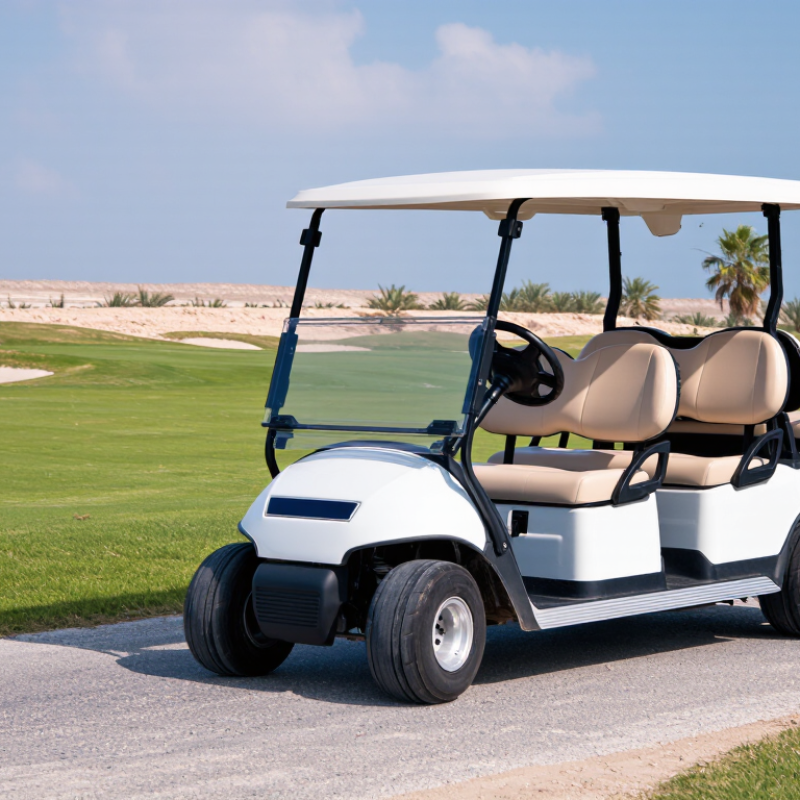
What Is the Top Speed of a Standard Golf Cart in 2026?

Standard Golf Cart Speed in 2026: The Basic Definition

A standard golf cart in 2026 usually reaches 12 to 15 miles per hour.

This range describes ordinary vehicles built for golf courses, private communities, and short-distance transport. It is not a universal legal limit.

Battery condition, passenger weight, tire pressure, and slope can change the measured result.

The number feels modest. It should.

The National Highway Traffic Safety Administration separates golf carts from low-speed vehicles under 49 CFR §571.500. Low-speed vehicles must travel between 20 and 25 miles per hour, while a typical golf cart remains slower.

SAE International’s J2258 standard also distinguishes low-speed vehicles from basic golf cars through design and performance requirements. These references support a practical 12–15 mph definition for a standard cart, rather than a marketing claim.

Real testing can produce different results. A lightly loaded cart may touch 15 mph on level pavement. Four adults, soft ground, or an aging battery may reduce speed noticeably. Speedometers can also be imprecise.

A 2025 industry safety review from the National Golf Car Manufacturers Association emphasized inspection, braking performance, and operating conditions rather than speed alone. That point deserves attention.

Top speed is easy to advertise, but stopping distance matters more beside pedestrians and parked vehicles. In 2026, “standard golf cart speed” should mean a typical 12–15 mph capability under normal conditions, not the fastest number from a downhill test.

Typical Speed Ranges for Gas and Electric Golf Carts

What Is the Top Speed of a Standard Golf Cart in 2026?

A standard golf cart usually reaches 12 to 15 mph, whether powered by gas or electricity. Gas models may approach 15 to 19 mph because their engines maintain power on gradual slopes. Electric carts often deliver smoother acceleration, but their top speed depends on battery condition, controller settings, and passenger weight. The label “standard” is slippery.

The National Highway Traffic Safety Administration classifies low-speed vehicles at 20 to 25 mph, but that category is not the same as an ordinary golf cart. A 2024 technical review from the International Light Transportation Vehicle Association places many recreational carts below that threshold. This difference matters. A cart advertised at 20 mph may include upgraded programming or equipment beyond factory specification.

Real-world testing gives a clearer answer. On a flat, dry path, measure speed with a GPS device, two adults onboard, and properly inflated tires. Expect roughly 12 to 15 mph from a conventional electric cart and 14 to 19 mph from a gas cart. Hills change the result quickly. So does a weak battery.

I have found speed claims less reliable when testing includes only one light driver. That method looks convenient, but it exaggerates everyday performance. Temperature, cargo, tire size, and maintenance can each reduce the final reading. Small details matter.

Key Factors That Affect a Golf Cart’s Top Speed

What Is the Top Speed of a Standard Golf Cart in 2026?

Key Factors That Affect a Golf Cart’s Top Speed

A standard golf cart usually reaches 12 to 15 mph in 2026. Some modified models can approach 20 mph, but that is not typical. SAE International’s J2258 guidance treats these vehicles as low-speed platforms, not highway transport. The National Golf Foundation’s 2024 Golf Industry Overview reports more than 16,000 golf facilities in the United States. That scale explains why stable, controlled speed often matters more than maximum speed.

Several factors change the final number. Battery voltage, motor output, controller settings, tire diameter, passenger weight, and road slope all matter. A fully charged battery may deliver stronger acceleration. A weak battery can reduce speed noticeably near the end of a long route. Larger tires may increase theoretical speed, but they can also reduce torque. A steep grass path feels very different from smooth pavement. Wind matters, too. Small details add up.

Tips: Check tire pressure before testing speed. Test on a flat, private course route. Use a GPS device, because dashboard readings can be inaccurate. Record battery charge, load, surface, and temperature. Compare results under the same conditions. SAE testing principles support repeatable measurements, but real-world results still vary. That limitation deserves attention. A claimed top speed is not always a usable top speed.

What Is the Top Speed of a Standard Golf Cart in 2026?

A standard factory golf cart typically reaches about 12–15 mph. Speed controllers, tire diameter, system voltage, passenger load, battery condition, terrain, and vehicle weight can significantly affect the final top speed.

The chart shows representative upper-speed benchmarks in miles per hour. Modified configurations are not equivalent to a standard golf cart, and actual performance varies with setup, terrain, maintenance, and local safety regulations.

Legal Speed Limits and Where Standard Carts Can Operate

What Is the Top Speed of a Standard Golf Cart in 2026?

A standard golf cart usually reaches 12 to 15 miles per hour on level ground. Some models may move slightly faster, but road legality is a separate question. Speed depends on battery condition, passenger weight, tire pressure, and slope. A full cart can feel surprisingly slow uphill.

Local rules control where these vehicles may operate. Many communities allow carts on private courses, resort paths, gated roads, and specially marked neighborhood streets. Public-road access may require registration, lights, reflectors, mirrors, seat belts, or insurance. Some areas permit carts only on roads with posted limits of 25 or 35 miles per hour. Other places prohibit them entirely.

Check the municipal transport office before driving beyond private property. Read every roadside sign, even on familiar streets. A cart approved for one neighborhood may not be legal in the next town. That detail is easy to miss.

Legal speed limits do not make a cart faster. They only define the road environment and operating conditions. Drivers should keep well below the posted limit when pedestrians, bicycles, parked cars, or wet pavement are nearby. Braking distance also grows on slopes. The weak point is often judgment, not the motor. Rules change, and online advice can become outdated. Local confirmation remains the most reliable source.

What Is the Top Speed of a Standard Golf Cart in 2026? - Legal Speed Limits and Where Standard Carts Can Operate

Data Dimension Typical or Legal Figure What It Means Where It Generally Applies 2026 Practical Classification
Typical top speed of a standard golf cart 12–15 mph Most factory-standard golf carts are designed for low-speed travel rather than normal road traffic. Golf courses, private communities, private property, resorts, and other controlled areas. Common operating range
Common design-speed ceiling About 20 mph A cart designed to travel no more than 20 mph is generally treated as a golf cart under many U.S. state laws, although definitions differ by jurisdiction. Private property and public roads only when specifically permitted by state or local rules. Not automatically street legal
Federal low-speed vehicle range 20–25 mph Federal motor-vehicle standards define a low-speed vehicle by its capable top speed, not as an ordinary golf cart. Additional safety equipment and certification requirements apply. Public roads where registration, equipment, insurance, licensing, and local operating rules are satisfied. Different from a standard cart
Roads with a posted limit of 25 mph or less Usually the most favorable road environment Some jurisdictions permit golf carts on designated roads in low-speed areas, but a posted limit alone does not create permission to operate. Local roads, residential streets, or designated municipal routes where an ordinance allows golf carts. Permission must be confirmed locally
Roads with a posted limit of 30 mph or less Permitted in some jurisdictions Several state frameworks use a 30-mph threshold for certain golf-cart routes, often together with local authorization, required equipment, and time-of-day restrictions. Designated public roads in participating municipalities or counties. Rules vary by state and locality
Roads with a posted limit above 35 mph Generally not suitable or permitted for standard carts Standard carts usually cannot match surrounding traffic and commonly lack the safety equipment required for higher-speed roads. Ordinary highways and major arterial roads. Generally prohibited
Interstate highways and controlled-access highways Not permitted for standard golf carts Low-speed vehicles and golf carts are generally excluded because they cannot safely maintain highway speeds and may not meet highway-entry requirements. Interstates, expressways, and other controlled-access facilities. Do not operate
Private property Owner- or site-imposed limit Property owners may establish operating rules, but general safety obligations and local laws can still apply, especially near public roads. Private estates, campuses, resorts, farms, event venues, and gated communities. Usually allowed with permission
Golf-course paths Course management limit Speed is normally controlled by the course operator and should be reduced near tees, greens, pedestrians, slopes, and wet surfaces. Golf-course cart paths and maintenance areas where authorized. Common intended use
Neighborhood or community roads Local ordinance controls Some communities allow carts on specified streets; others require registration, a permit, lights, reflectors, seat belts, slow-moving-vehicle markings, or insurance. Gated communities and incorporated or unincorporated residential areas. Check the local code first
Required equipment for public-road use Jurisdiction-specific Common requirements may include headlights, brake lights, turn signals, reflectors, mirrors, a windshield, seat belts, a parking brake, and a vehicle identification number. Public roads where golf-cart operation is authorized. Equipment may determine eligibility
Registration, insurance, and driver requirements Varies by jurisdiction A driver license, registration, liability insurance, minimum age, or a local permit may be required. Some private-property uses do not require the same documents. Public-road operation and designated municipal routes. Verify before driving
Maximum safe speed on turns, slopes, and crowded paths Lower than the cart's top speed Top speed is not a recommended speed. Operators should slow down for pedestrians, sharp turns, hills, loose surfaces, rain, and limited visibility. All operating environments. Safety-based reduction recommended
Bottom-line answer for 2026 Usually 12–15 mph A standard golf cart is normally a low-speed vehicle for private or controlled areas. Public-road use depends on the exact state statute, county or city ordinance, road designation, equipment, and vehicle classification. Use only where the property owner or governing authority expressly permits it. Confirm current local law

Legal rules can change and may differ between states, counties, cities, private communities, and individual roads. Before operating a standard golf cart on a public road in 2026, verify the current requirements with the applicable local motor-vehicle authority and local government.

How Standard Golf Carts Compare With High-Speed Models

What Is the Top Speed of a Standard Golf Cart in 2026?

A standard golf cart typically reaches 12 to 15 mph on level pavement. Its small electric motor favors smooth torque, not highway speed. High-speed models commonly reach 19 to 25 mph after receiving stronger motors, upgraded controllers, better brakes, and revised suspension. The difference feels obvious on a long private road. A standard cart moves calmly. A high-speed cart arrives sooner, but it also needs more stopping distance. Real-world results vary.

The U.S. National Highway Traffic Safety Administration defines a low-speed vehicle as having a top speed above 20 mph, but not exceeding 25 mph under FMVSS No. 500. That standard helps explain the high-speed category. It does not mean every fast cart meets road-use requirements. The comparison is not perfectly clean. Tire pressure, passenger weight, hills, battery condition, and temperature can change performance. A tired battery may reduce speed before the driver notices.

Tips: Check the cart with a GPS speed app, not only its dashboard. Test braking on dry, private pavement. Confirm the vehicle’s rated speed, lighting, seat belts, and local requirements before using public roads. NHTSA data also supports a cautious approach: low-speed vehicles must meet specific equipment standards, while ordinary carts may not. A practical test matters more than a sales figure. That lesson is easy to forget.

FAQS

What is the standard golf cart speed in 2026?

A standard golf cart usually travels 12 to 15 miles per hour on level pavement. That range is practical, not absolute.

What conditions can reduce a golf cart’s speed?

Four adults, soft ground, hills, low tire pressure, or an aging battery can reduce speed noticeably. Temperature may matter too.

Can a standard golf cart reach 15 miles per hour?

Yes, a lightly loaded cart may reach 15 miles per hour on flat, dry pavement. Results vary.

How fast are high-speed golf cart models?

High-speed models commonly reach 19 to 25 miles per hour. They may use stronger motors, improved brakes, and revised suspension.

Is a faster golf cart automatically suitable for public roads?

No. Speed alone does not prove road suitability. Equipment, lighting, seat belts, brakes, and local rules also matter.

Why does stopping distance matter more than top speed?

A faster cart needs more room to stop near pedestrians, parked cars, or gates. The exciting number is not always the safest one.

How can I measure a golf cart’s actual speed?

Use a GPS speed app during a level-pavement test. Dashboard speedometers can be inaccurate. Test carefully.

What should I inspect before testing speed?

Check tire pressure, battery condition, brakes, passenger load, and surface conditions. A small detail may change the result.

Is 12 to 15 miles per hour a legal speed limit?

No. It describes typical performance, not a universal legal limit. Local requirements may differ, so verify them before road use.

Conclusion

In 2026, what is the top speed of a standard golf cart? Most standard models typically reach about 12 to 15 miles per hour, although the exact figure depends on whether the cart uses an electric or gas-powered system. Electric carts often provide smooth, quiet acceleration, while gas carts may maintain performance more consistently over longer distances. Battery condition, motor output, vehicle weight, tire size, terrain, and maintenance can all influence the final speed.

Standard golf carts are mainly designed for golf courses, private communities, resorts, and other controlled areas rather than high-speed travel. Their permitted operating areas and speed limits depend on local regulations, so owners should always follow posted rules and use appropriate safety equipment. High-speed golf cart models may reach around 20 to 25 miles per hour or more, but they generally require stronger components and may be subject to additional equipment or registration requirements.

Liam

Liam

Liam is a dedicated marketing professional with a profound expertise in the industry, where he excels at highlighting the unique advantages of our core products. With a keen understanding of market trends and consumer needs, Liam frequently updates our company’s professional blog, providing......